Re-Usable N-95 Masks.....
Is it true????
(Click here for the Bengali version)

![Coronavirus Pictures [HD] | Download Free Images on Unsplash](https://images.unsplash.com/flagged/photo-1584036561584-b03c19da874c?ixlib=rb-1.2.1&ixid=eyJhcHBfaWQiOjEyMDd9&w=1000&q=80)

The crisis of COVID-19 has stirred every aspect of medical science as it is growing and getting more infectious.
As the Pandemic is growing the demand for safety kits are growing exponentially. Instead of proper guidelines from the authorities; companies have failed to produce the efficient, approved products as it is required for COVID-19 situation.
This deficit in demand and supply has showed some different approaches to maintain the service uninterrupted.
NIOSH and OSHA have permitted to use "Approved Particulate Filtering Facepiece Respirators" that at least can block 95% of airborne particles 0.3 um in size, manufactured by other companies. This effectively has reduced the crisis call in the medical services. But, somehow this approach is also failing as the crisis is developing day to day.
Here comes the new solution to manage the supply disruption. They have leveraged the extended use and reuse protocols now.
Extended use protocol is, the N-95 respirators that have crossed its shelf life can be used, only if the efficiency remains same.
Reuse protocols are not authorized by the manufacturers and yet under observation, but are gaining its application in the practical fields. Chinese and American engineers are devising new procedures for decontaminating and reusing the respirators.
Decontamination???? How to kill a virus?
Michael Mina, Asst. professor of epidemiology at Harvard University said, it is not very hard to kill a virus as long as it is not in a human body. "The simplest way is to take a mask and let it sit out for two weeks."
T.H Chan also mentioned something similar about killing a virus. "We all know the virus tends to die out after ten days or so."
But, this solution is not a practical approach regarding the present situation.
What are the ways to kill a virus???
Five simplest ways to kill a virus are,
1) Irradiation
2) Fumigation
3) Hot water
4) Steam
5) Baking
Each of them has shown effective results but they are not fulfilling the criteria for a successful decontamination.
A successful decontamination procedure must ensure that the masks come out as good as new.
3M, the largest manufacturer of N-95 respirators, has given four criteria to satisfy proper decontamination procedure.
1> It should be effective against the target organism, like SARS CoV2
2> It should not damage the respirators filtration efficacy.
3> It should not affect the proper fit of a respirator
4> Be safe for the person using it.
Ultra-Violet ray decontamination:
University of Nebraska University of Medical sciences showed that 15 mins of UV-C radiation to the exposed masks are enough to kill the virus.
They have used two UV-C towers containing eight bulbs in a completely isolated room, walls coated with special reflective paints.
Fumigation decontamination:
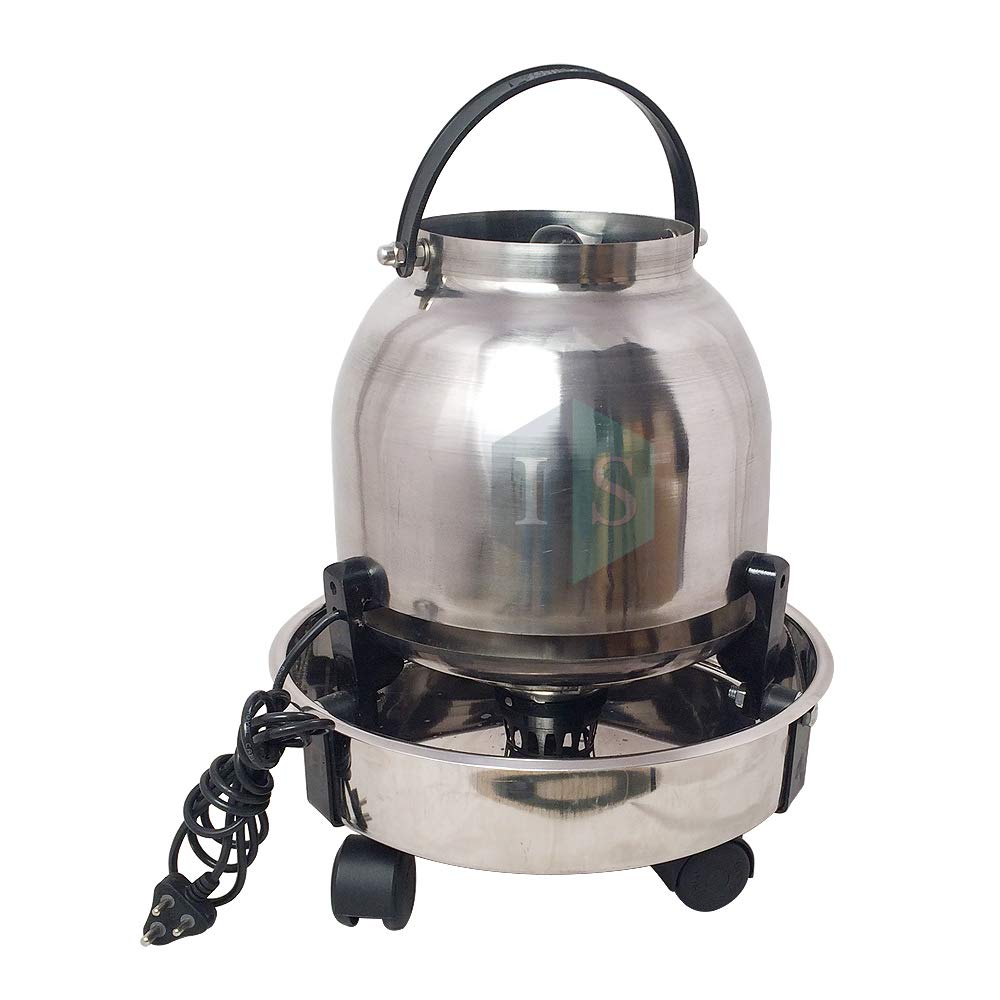
Duke University Hospitals are using a testing device that can gradually build up 300-750 ppm of vaporized hydrogen peroxide inside a completely isolated room for decontamination. It has showed 20 mins exposure to vaporized hydrogen peroxide has successfully sterilized the masks without changing its efficiency.
The drawback is the procedure time. It takes 4 hours for de-gassing the room and to use the masks again safely.
These facilities are not possible in a dental clinic. May be in some clinics but for all, this is not an affordable one. So here comes the affordable yet not approved decontamination procedures
Hot water heating or steam
During February'2020, Beijing University of Chemical Technology has shown an effective way for decontamination by their specific "regeneration treatment" procedure of disposable masks.
It is a 3 step procedure for decontamination.
> Immerse the mask in 56⁰ C hot water for 30 minutes
The temperature and timing is crucial for this procedure.
> The masks are then dried with standard, non-static hair dryer for 10 mins
This step is crucial for restoring the filtering function by regenerating the electrostatic charge.
> To verify the regeneration of electrostatic charge small scrapes of paper is used. The papers will stick to the mask surface.
This method is effective for maintaining the filtering function of the masks only for one decontamination cycle. From the second cycle the filtering efficacy reduces.
This method is only applicable for house hold users and for those who are at low risk for infection.
Using this method for medical professionals is not recommended.
In March' 2020, a team from National Health commission of China has shown the effective use of autoclave to decontaminate the exposed masks. The research is yet under process and one of the team members said, "It is well accepted that 30 min of pressurized steam at 121⁰ C can kill almost all pathogens."
He has also mentioned that the regenerated masks can hold its efficacy up to 99% after the first cycle of decontamination.
CDC has also shown its inclination about this method for decontamination of exposed masks.
Baking or Dry heat:
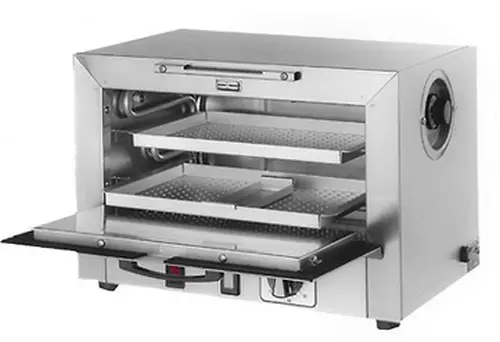
A group of researchers from Stanford University have shown that Baking the contaminated masks at
75-100⁰ C in a higher humidity for 30 mins can show good results as a decontamination procedure. Baking above 125⁰ C may change the polypropylene layer and make the mask ineffective.
Comparison
| Methods | Process | Time | Efficacy | Cycles |
| UV-C | Decontamination under UVGI | 15 mins | 90% | <10 decontamination |
| Fumigation | 300-750ppm HPV | 20 mins | 90% | 20 decontamination |
| Boiling heat | 56⁰ C water, | 30 mins | 80% | 1-2 decontamination |
| Steam heat | Autoclaving at 121⁰ C, | 30 mins | 80% | 1-2 decontamination |
| Baking | Heating in 75-100⁰ C | 30 mins | 80% | 20 decontamination |
Results:
UV-C irradiation has shown effective results but there are some reports against it. As the N-95 mask is a 3D structure, penetration of UV-C is under question. Some of the contaminant pathogens are found in the deeper layers of the respirator. Also this is not a very cost effective process for everyone.
HPV has shown some promising results. Though it is under observation but it has shown good results for decontamination procedure. No degradation of mask is reported even after 20 cycles. Only the elastic straps have shown some degradation due to the handling procedure.
Steam or Hot water is not recommended for the medical professionals as it brings down the filtering capacity of an N-95 mask from 95% to 80% just after one cycle. A respirator with 80% efficacy is not considered as an N-95.
Among all of these three procedures dry heat decontamination has shown the best results till date. One mask can be decontaminated for 30 cycles at least without the change of efficacy. But the handling procedure, man made errors can cause damage to the filter layers of polypropylene and the elastic bands.
29th March, 2020; FDA approved the HPV procedure of decontamination up to 20 cycles for a mask. If not contaminated with blood or other bodily fluids.
Though approved by FDA, the manufacturers are not recommending this procedures as a way out. According to their protocols till May, only 4-5 cycles of decontamination are used for a mask by HPV.
3M manufacturers are totally disagreeing with the facts of Steaming, boiling or baking procedures as these procedures are causing severe damage to the filter layers.
The Supply and Demand ratio
3M manufacturers used to produce 500 million N-95 masks per year. This crisis has increased the demand beyond the estimated levels. They have achieved producing 600 million N-95 masks by the end of April 2020. But in aspect of a demand market from 3.2 billion population it is pretty low to support the crisis.
What are the risks associated with the reuse of an N-95 mask?
* Discomfort. It will be hard to breath through.
* Ill fitting or loss of proper fit
* Loss of filtration effectiveness
* Risk of infection spread.
Is there any alternatives for N-95??
There is a recommendation for partial use of N-95 alternatives or N-95 equivalent respirators.
Like, FP2 (Europe), KPN95 (China), P2 (Australia). CDC has given a list for 'equivalent regulatory designations' as an alternative to N-95 masks.
Elastomeric full face N-95, N-100, self contained breathing apparatus are most effective alternatives. But it is costly and availability is limited.
Expired N-95 stocks are also recommended by the NIOSH to supplement the deficit. Respirators that may retain their filter performance beyond the labelled date of shelf life can be used if in a good shape.
Non certified N-95 masks. CDC has stated that, “as a last resort, it may be necessary for healthcare personnel to use masks that
have never been evaluated or approved by NIOSH or homemade masks. Use of these unapproved masks may
be considered for care of patients with COVID-19, tuberculosis, measles, and varicella. However, caution should
be exercised when considering this option.”
The chosen alternatives should at least provide a tight fit and should be disposable or at least compatible with sterilization by autoclave.
When to discard and when to re use??
There is a strict guidance from NIOSH to all the health care professionals to discard their N-95 masks after these following events.
* Discard your N-95 respirator following use during aerosol generating procedures.
* Discard if the mask is contaminated with blood, nasal or respiratory secretions or any bodily fluids from the patients.
* Use a surgical mask or face shield to reduce the surface contamination of the N-95 respirator.
* Hang the used N-95 respirators in a designated storage area or put them in a container, such as paper bags, in between uses.
* Storage containers should be disposed or cleaned properly.
* Clean hands properly with soap and water before touching the mask for donning or to adjust the mask.
* Use clean gloves for doffing the respirators after using it.
* Avoid touching the inside of the respirator.
* Before reusing a proper fit test must be checked.
The OSHA guidance for N-95 respirators
- Once worn in the presence of an infected patient the mask is considered as contaminated and should be discarded immediately after leaving the room with proper hand hygiene.
- Reuse of the respirators should be done under proper guidance and must be discarded if the device is damaged or soiled.
- Use of proper face shield or surgical masks over the respirators may reduce the chances of surface contamination.
- One should take enough care to check the proper fit before reusing a respirator.
Few studies and their results
> 48% of the respirators failed the fit test after re-donning. This may be due to the users improper handling.
> The study suggests that the respirator must be discarded if it is contaminated by the secretions of sneeze or cough.
> The respirator must be discarded after close contact with a confirmed COVID-19 infected patient cause the virus has demonstrated ability to persist and remain infectious for a long time on the mask.
> Implementation of UVGI has shown effective results but it should be done under consideration of the manufacturers guide and the materials type.
> Anti microbial wipes cannot clean or sterilize the N-95 mask.
Some equivalent or alternative safe products for surgical N-95 respirators
1) NIOSH - N95 - 42CFR84
2) FFP2 EN149-2001

3) KN95 GB2626-2006

4) P2 AS/NZ 1716/2012

5) Korea 1st Class KOMEL-2017-64
6) Japan DS2 JMHLW 214-2018
Top 10 N-95 manufacturers in 2020
3M - Honeywell - Kimberly Clark Corp.
Ambu - BD - Prestige Ameritech
Alpha Pro Tech - Louis M. Gerson Company
Teleflex - Moldex
Shanghai Dashend - Future trends
How to check a Proper N-95
1) Check the approval authority. An original mask must have a NIOSH logo
2) Check the model number and correlate with Google
3) Check for the TC-approval number
4) Check for the Lot number
Presented by Dr. Arka Bhattacharya
Infromations from
ECRI Clinnical evidence assessment
FDA N-95 respirators and surgical masks
Strategies for optimizing supply of N-95 respirators
FDA, understanding the difference
PubMed
3M website and brochure
Duke University data access
CDC.gov